Exploration
(lead the technology)
How can staying at the forefront of technological advances and exploring new AI tools accelerate research and unlock new possibilities for visual exploration?
We understand that the quest for intelligence also means being at the forefront of technological advances and exploring new tools, systems and approaches. In our book, Intelligent Beauty, we showcase that the more we learn, the faster we can develop research material into wider visual exploration. This comes into its own during a project’s research & development phase, as Carmel Harrison, Head of CMF Design at Logitech told us:
“Before diving into the physical design of a product, it’s essential we establish a clear vision of the desired experience — what we want people to feel and how the design can meet their needs. This vision guides explorations on materials, colour and integrated technologies, which we then prototype, iterate and refine. The wider we can go with our exploration, the better we can craft a cohesive story that visualises experience and feeling.”
By developing our own ways of using new software, tools and AI, we take control of them for creative tasks, using them to benefit a project under our own guidance. Each tool becomes a valuable part of what we need to achieve.
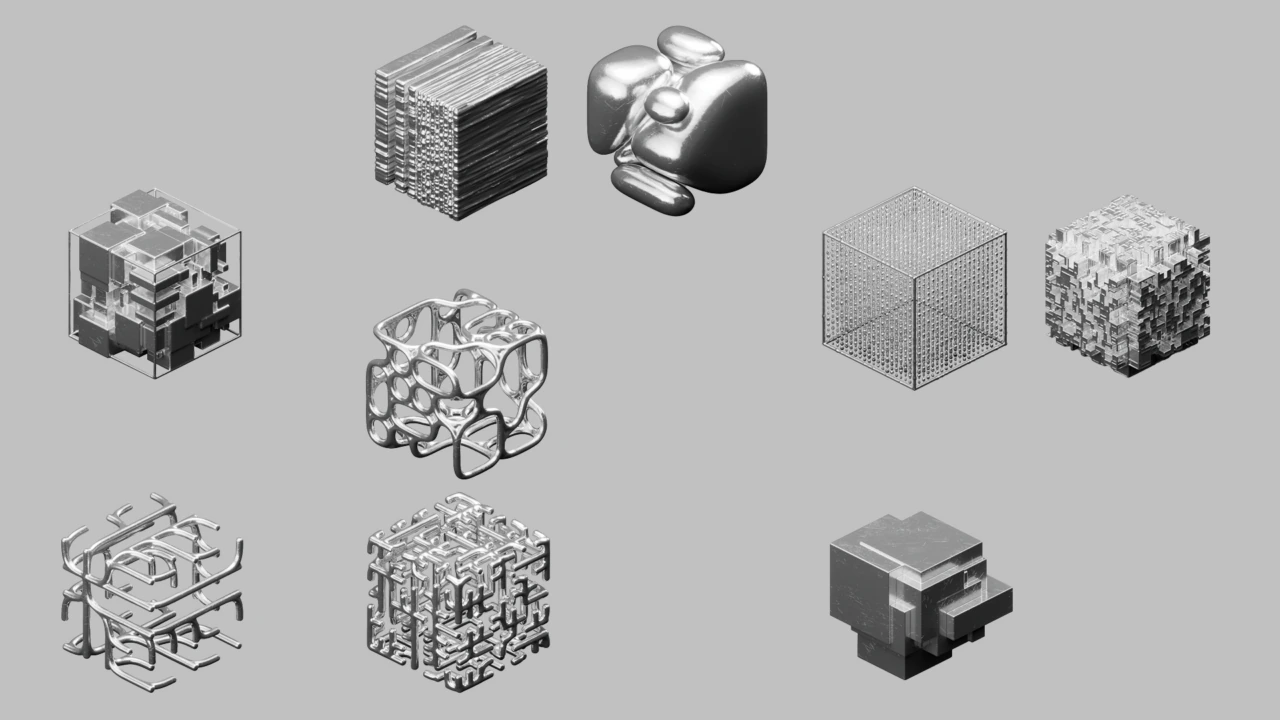
While creating Vessel for London Craft Week, we used a process called ‘wedging’ in the 3D software Houdini, helping us to quickly iterate a range of progressively adaptable outputs. This is a different example of design amplification, thinking beyond the intended use of a technology to reach unexpected creative breakthroughs.
To achieve these outcomes, new tools and innovations become a natural part of the thinking process. On this, Katherine offers fascinating insight into how our brains absorb familiarity of a tool: “Studies suggest that with frequent use, the human brain can start to perceive tools and technology as an extension of itself during creative processes. In this ‘tool embodiment’, the brain treats external objects as part of the cognitive system, enhancing creativity and productivity.”
Experimenting and pushing tools to do different things like this is crucial to unhindered design exploration. It ensures effective and thorough processes can be delivered quickly and repeated at scale. Importantly, Found’s voice and character must always come through, weaving together all we’ve learnt to find the most unique and relevant outcomes.
Our machines, systems and tools don’t dictate those outcomes, but combining them with thinking, discussion and thorough research ensures success. Coupled with our skill in crafting beauty, research-based projects form richer experiences, where depth of thinking converts into depth of engagement.
Tools evolve. Our thinking leads them. By exploring with intent and putting human insight first, we turn technology into a creative ally: Intelligence is knowledge with purpose.