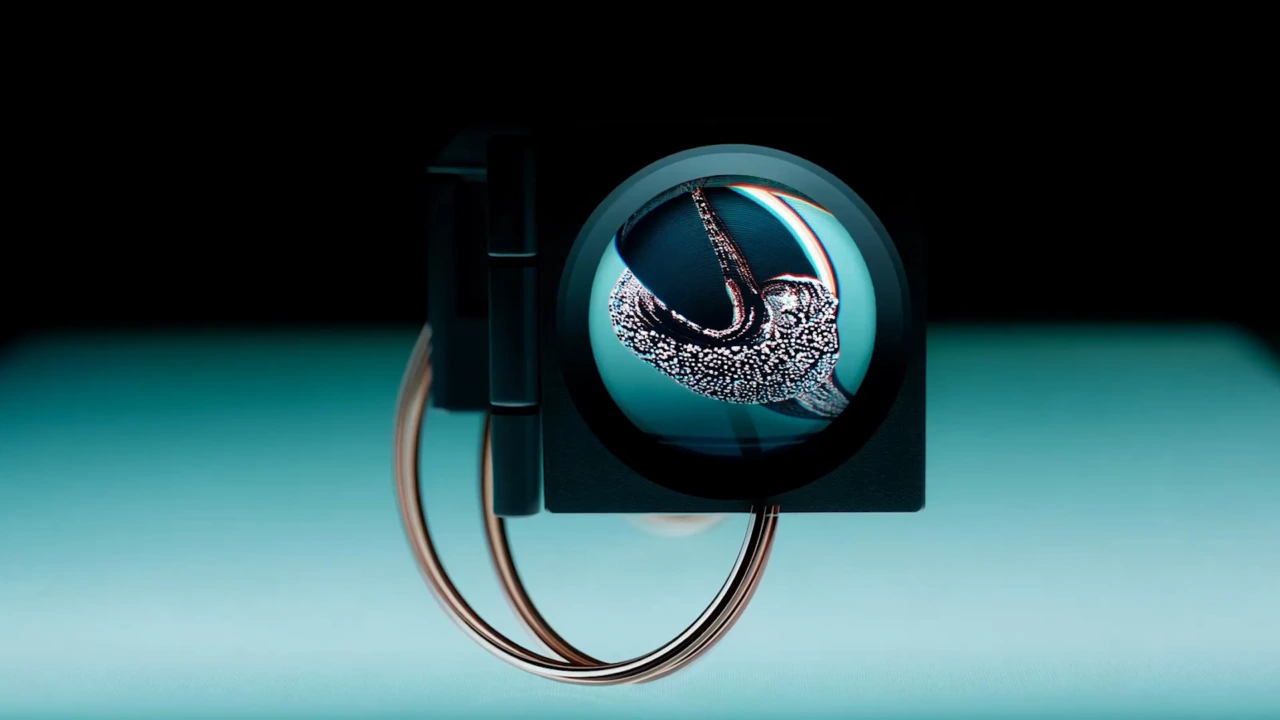
No.3
[Meta States]
Exploring the effect of technological forces on material states
The technology within meta-materials exists in an invisible, microscopic space where organic systems meet synthetic creation. Inspired by this intersection, we set out to explore how industrial materials could behave in entirely new ways, moving beyond their conventional roles and uncovering unique aesthetic signatures drawn from the science of adaptive meta-materials.
Adaptive Structures
[Base Manipulation]
Our research began with the goal of disrupting traditional material behaviours and exploring how matter can exist in multiple states at once. To achieve this, we developed custom tools that introduced new external influences into our process. We then applied the resulting animated maps to an aluminium extrusion system, which featured the precise, angular lines and sharp geometric forms typical of conventional manufacturing.
[01] Early test animations saw us testing liquid activations and fluid behaviours
[02] Adding parameters to our tools created increasingly organic animations
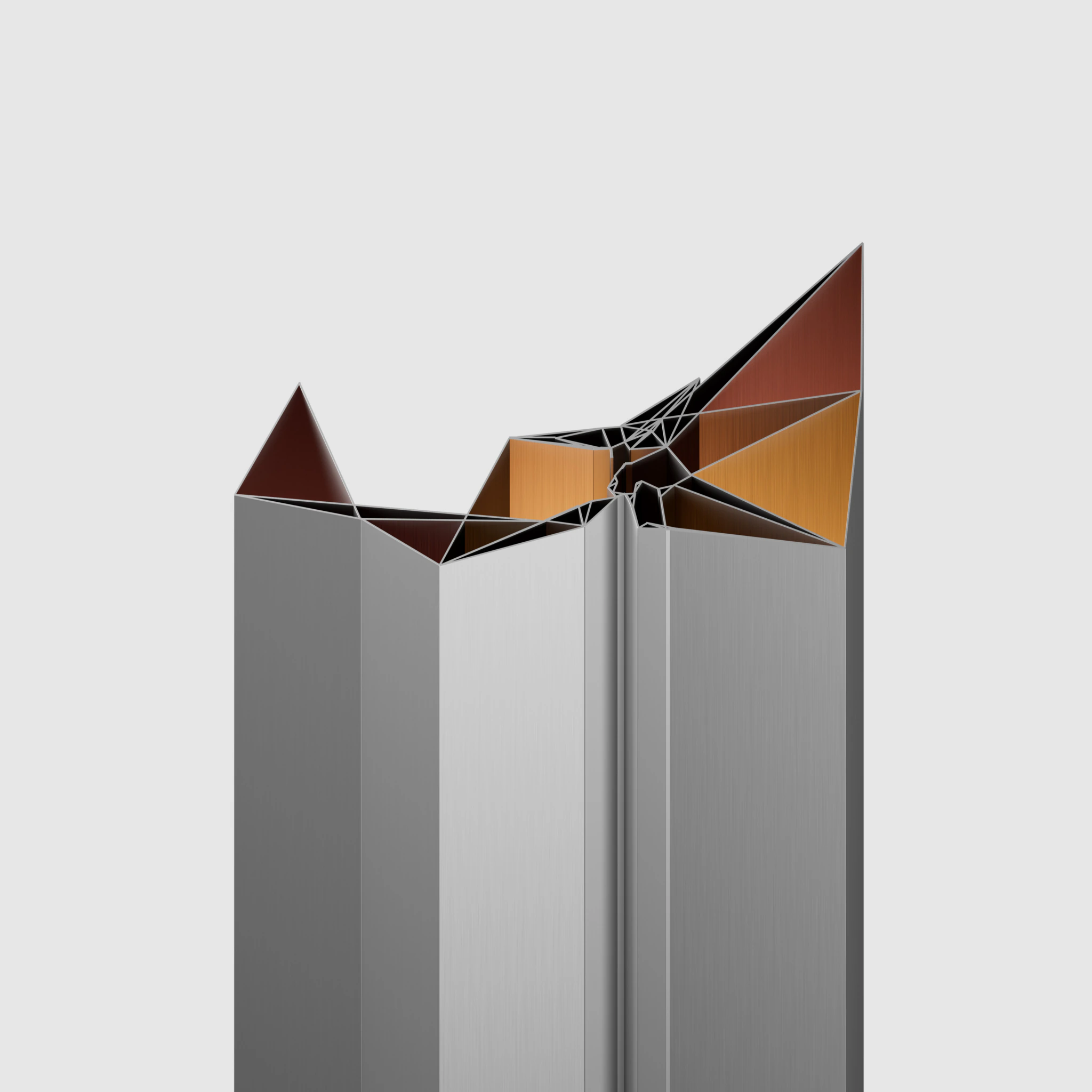
[03] Recognisable rigid aluminium extrusions with hard surfaces
[04] Cellular cross-section animations transform aluminium into an unexpectedly fluid state
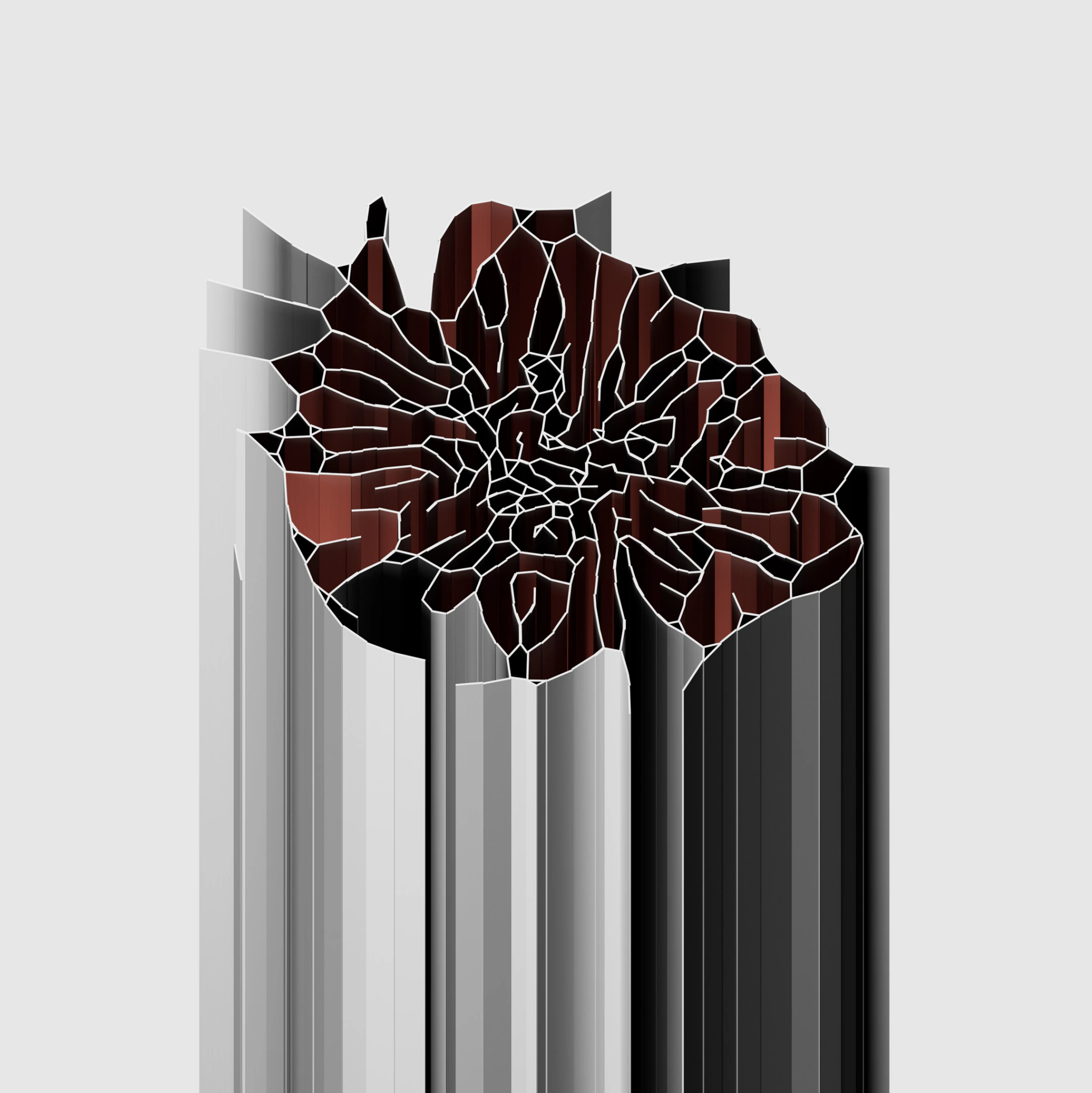
As our animation iterations evolved, our setup began to exhibit far more fluid characteristics, a solid behaving like a liquid. As we refined the code, rigid angles grew into intricate, organic networks. The final extrusions became deeply cellular, resembling natural, living arrays rather than conventionally machined parts.
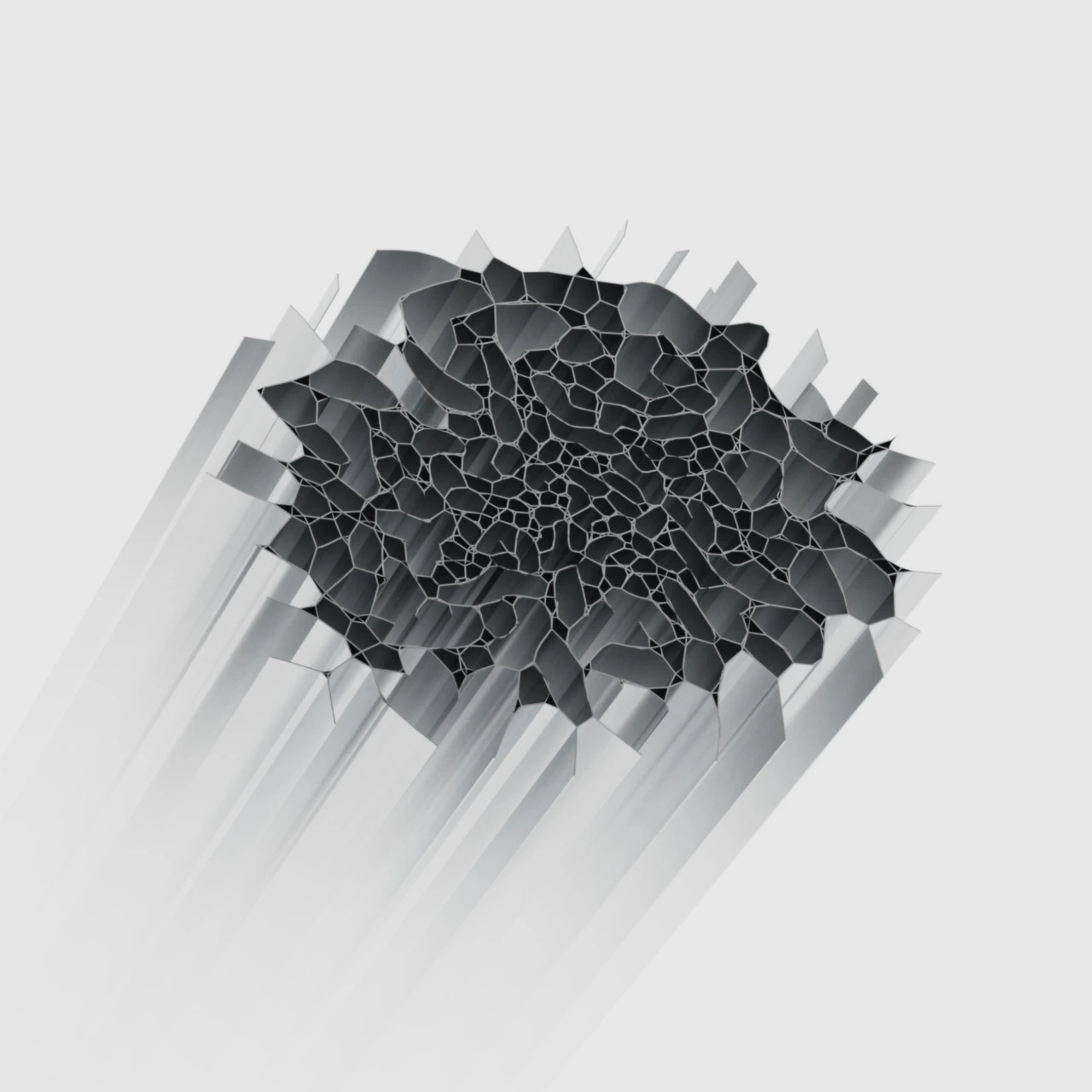
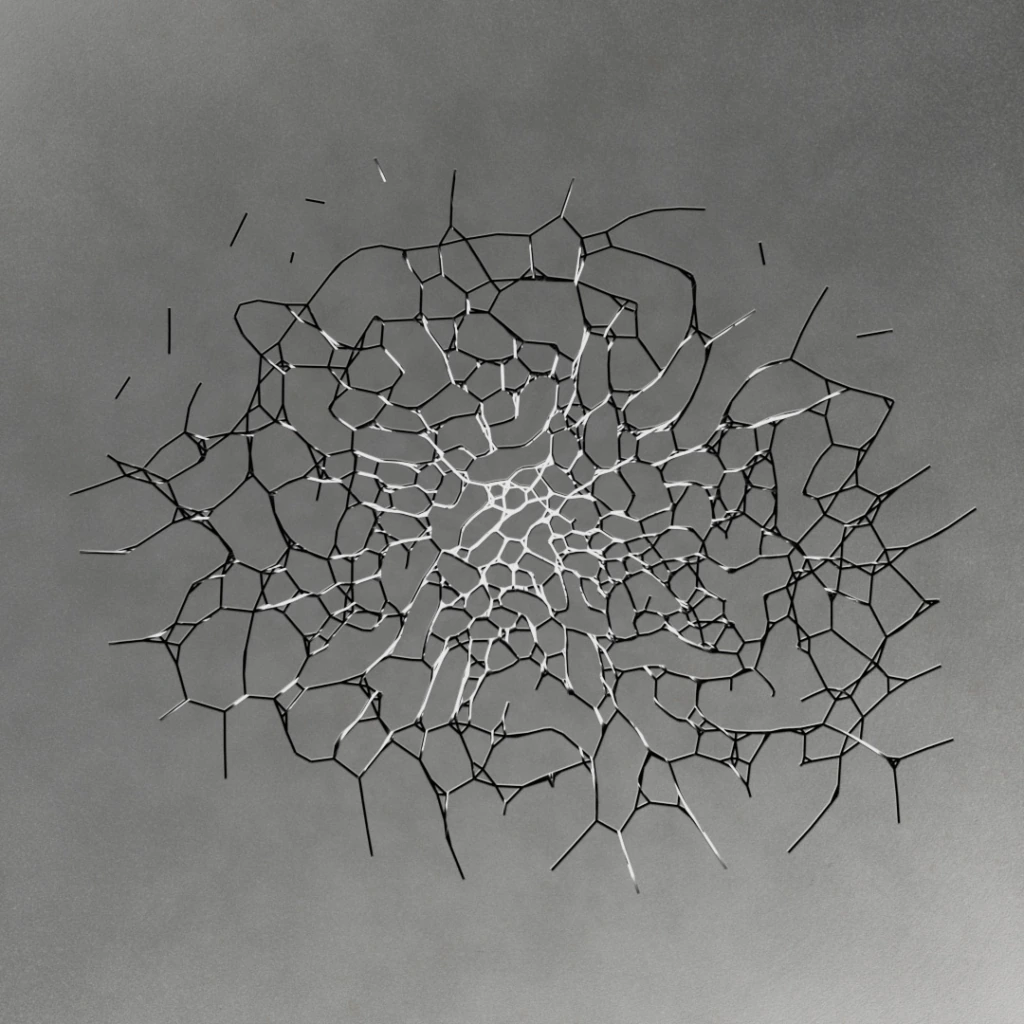
[05] Translating new liquid behaviours into tangible solid forms
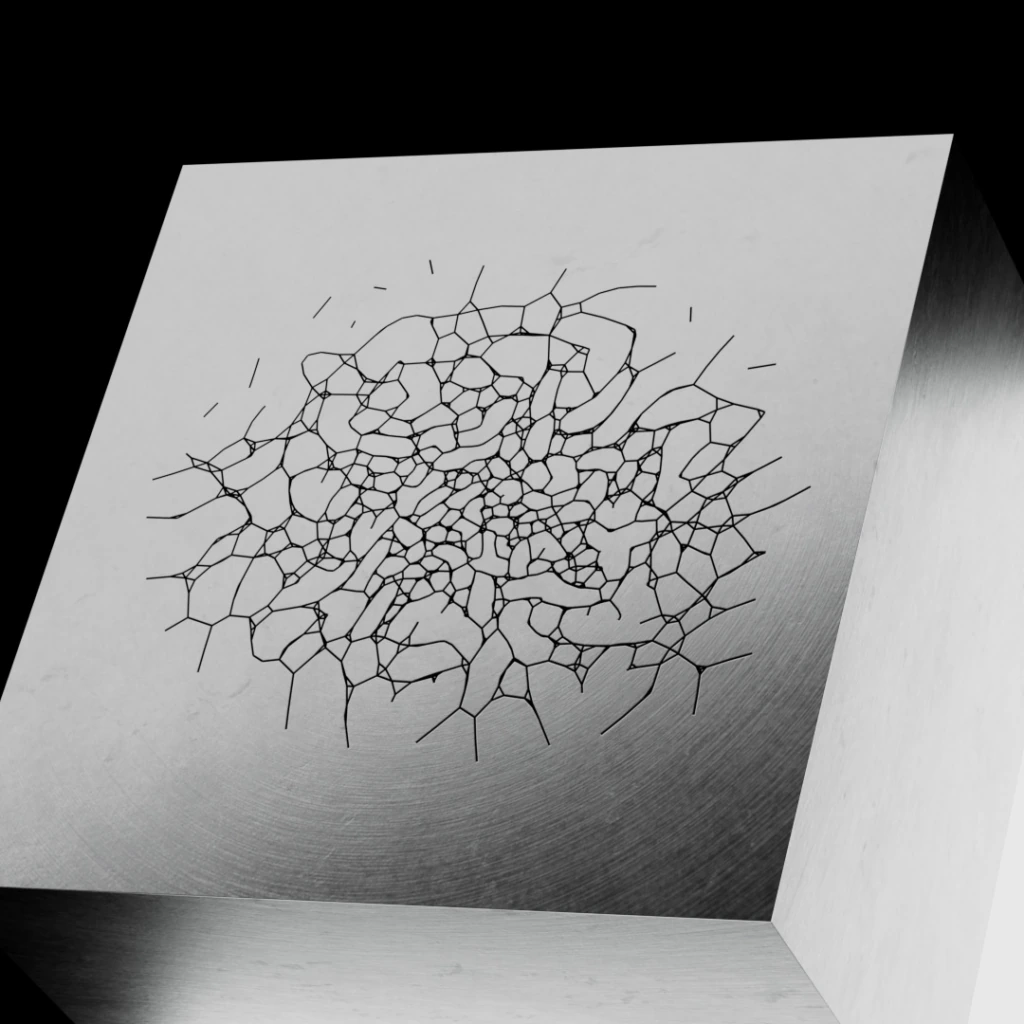
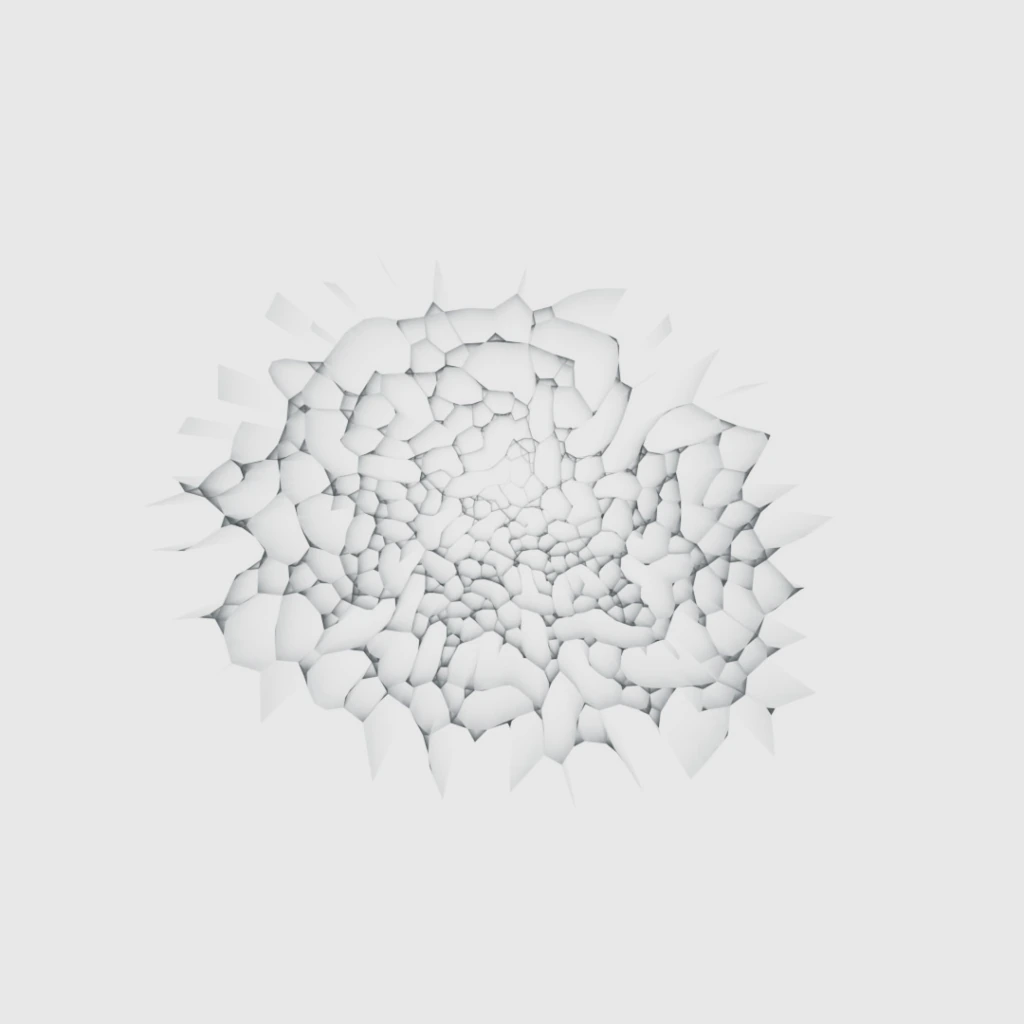
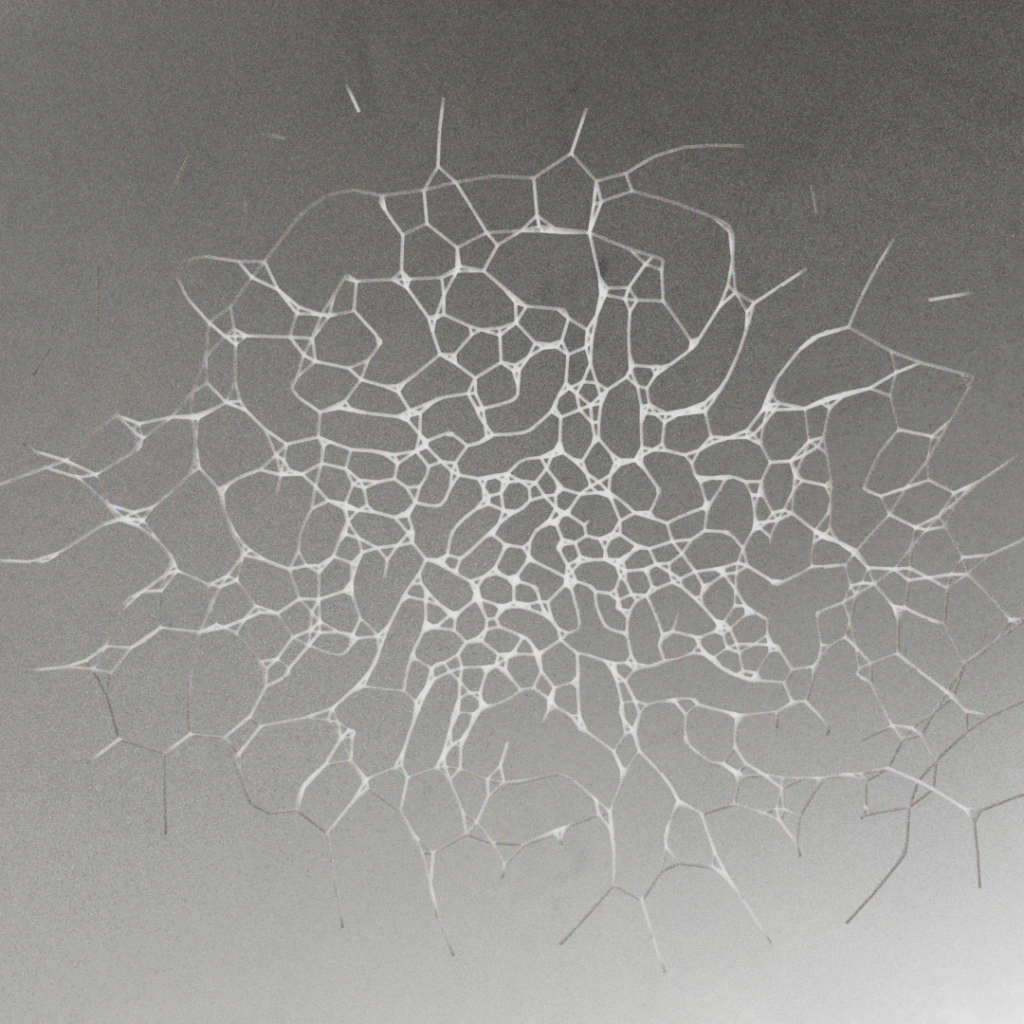
[06] Extrusion profile schematics for both solid and liquid states
Biphasic Structure
[Driven by Nature]
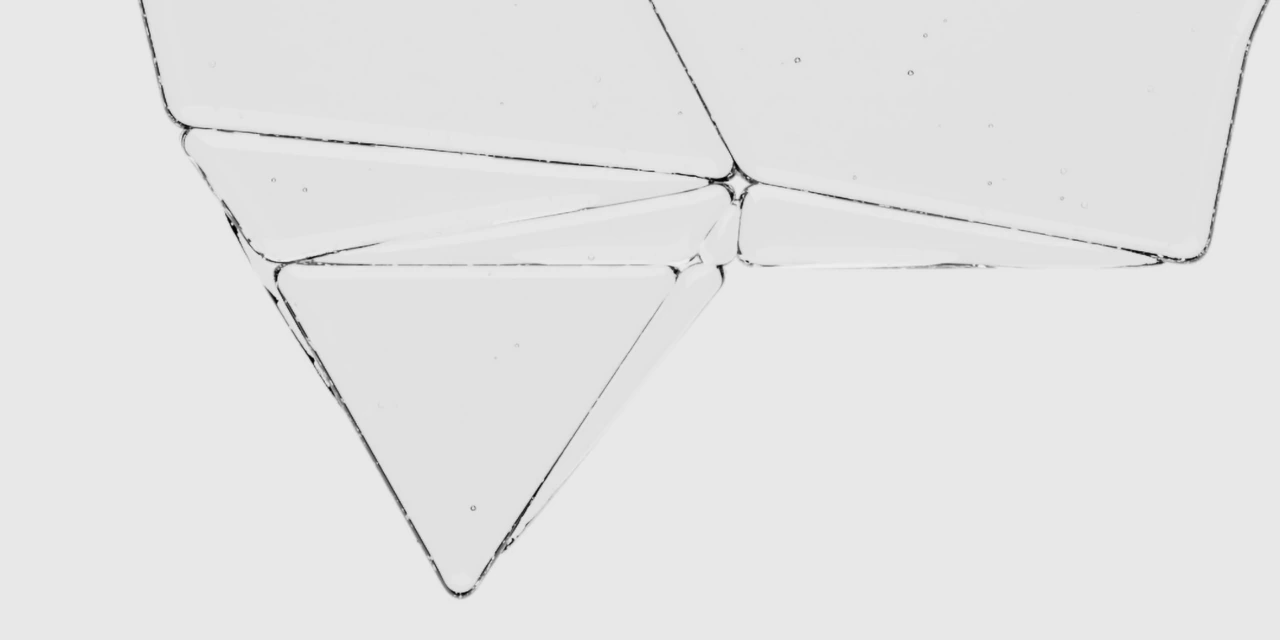
Continuing our exploration into states of matter, we examined how liquids could begin to behave like solids, fracturing, extruding, and faceting, for example. Using code-driven animated assets, our experiments produced results that hovered at the boundary between liquid and solid. This threshold is known as the 'biphasic' state, in which a material exhibits characteristics of both phases simultaneously. Our close-up tests provided a unique glimpse into how biphasic materials look and behave.
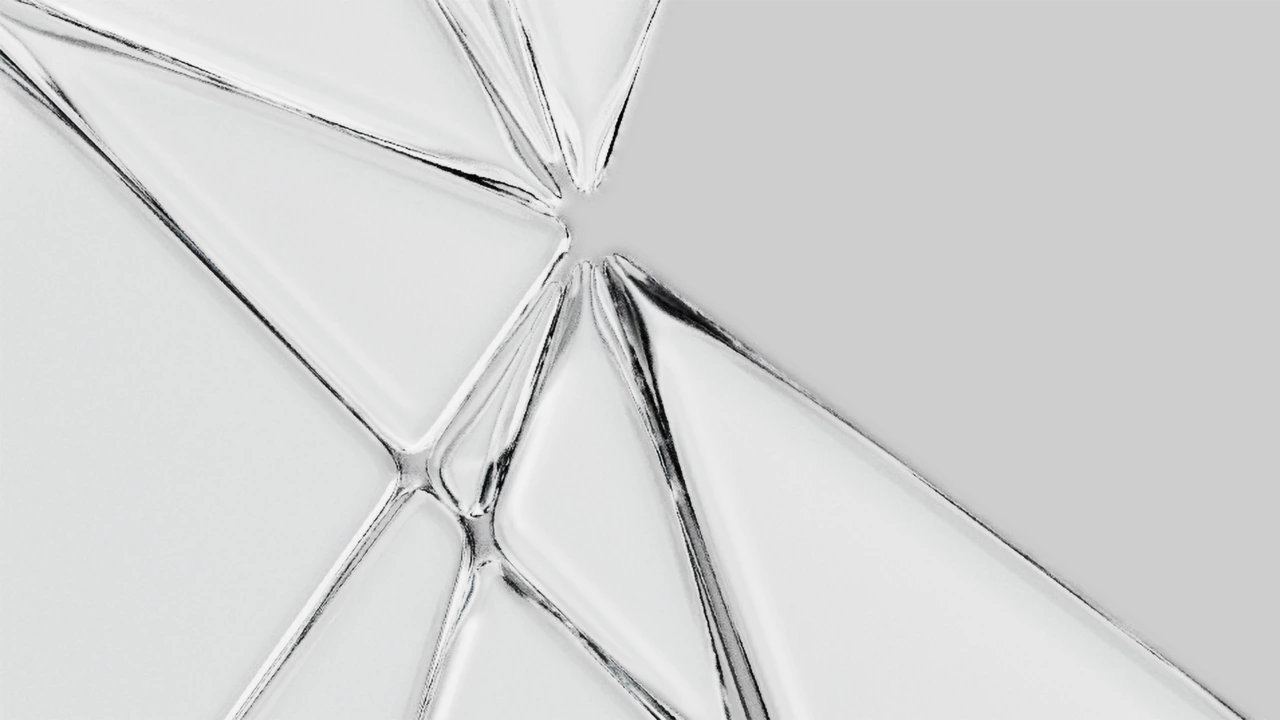
[01] Code-driven animation maps create liquid-like fractures
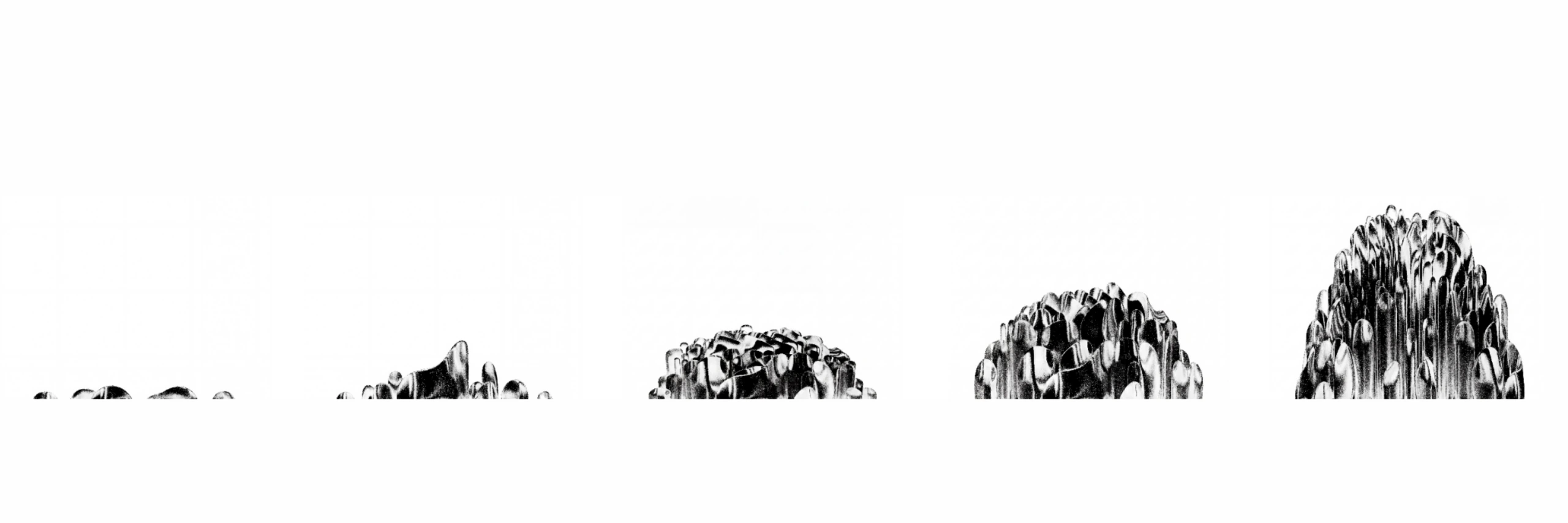
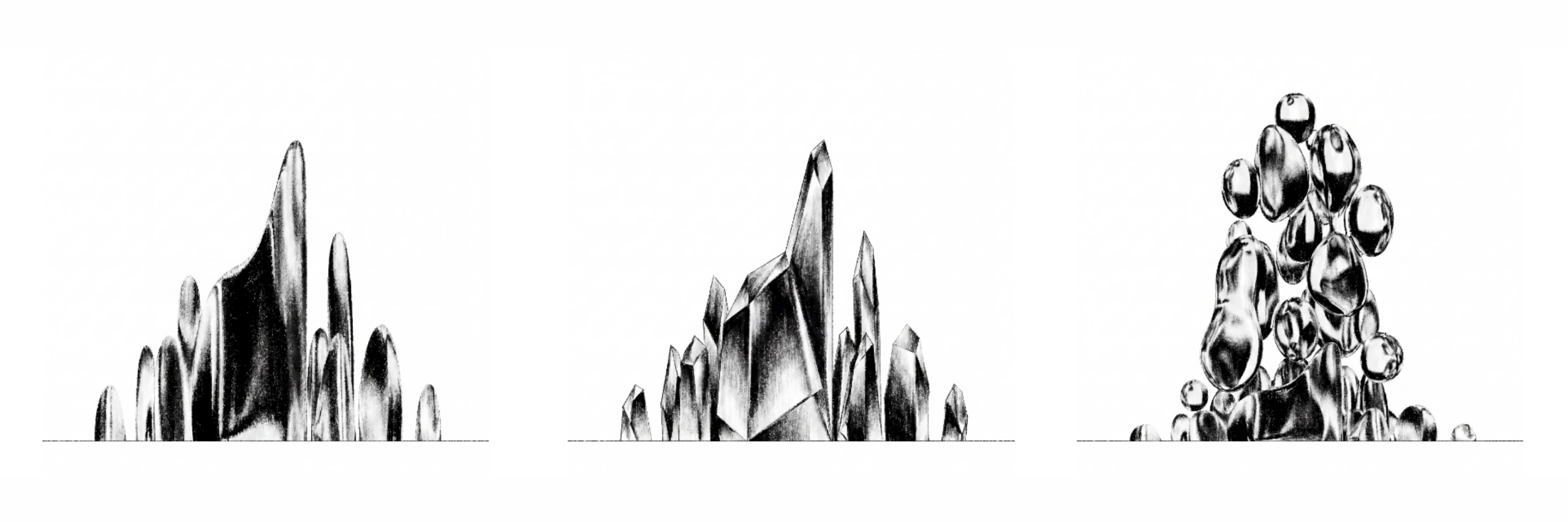
[02] Evolutionary diagrams showing changes of state as liquids ‘grow’ into solid forms
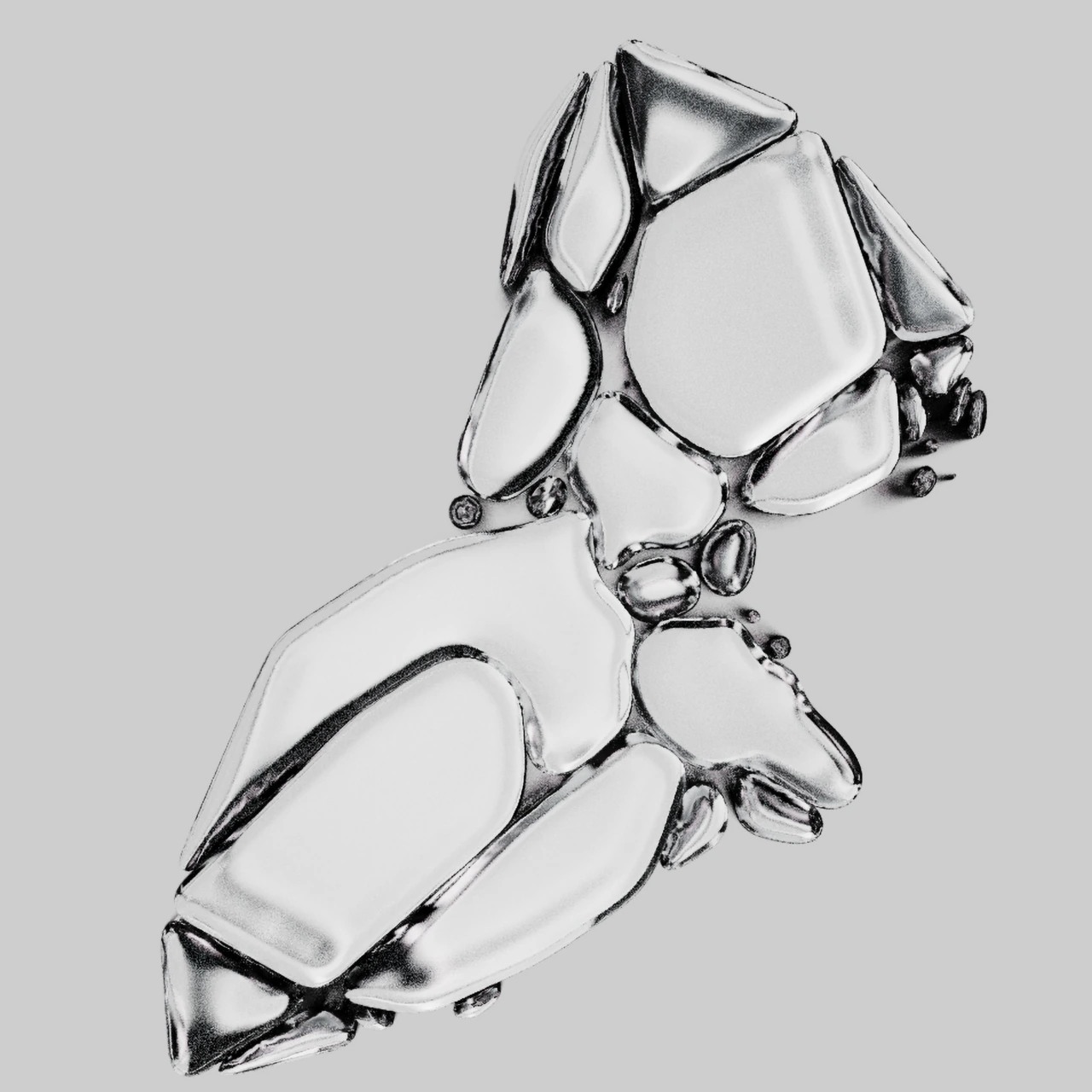
Extruding and expanding the liquid forms led to some of our most intriguing results, especially when viewed from different angles. The boundary between liquid and solid became increasingly blurred, offering another way of representing a biphasic state. Even when we reverted the material to a fluid form, aspects of its solid state remained. This persistence reflects how digital materials, like those in nature, retain traces of transformation, showing that the boundaries between states are dynamic rather than fixed.
[03] IPR capture, establishing a graphite-textured aesthetic
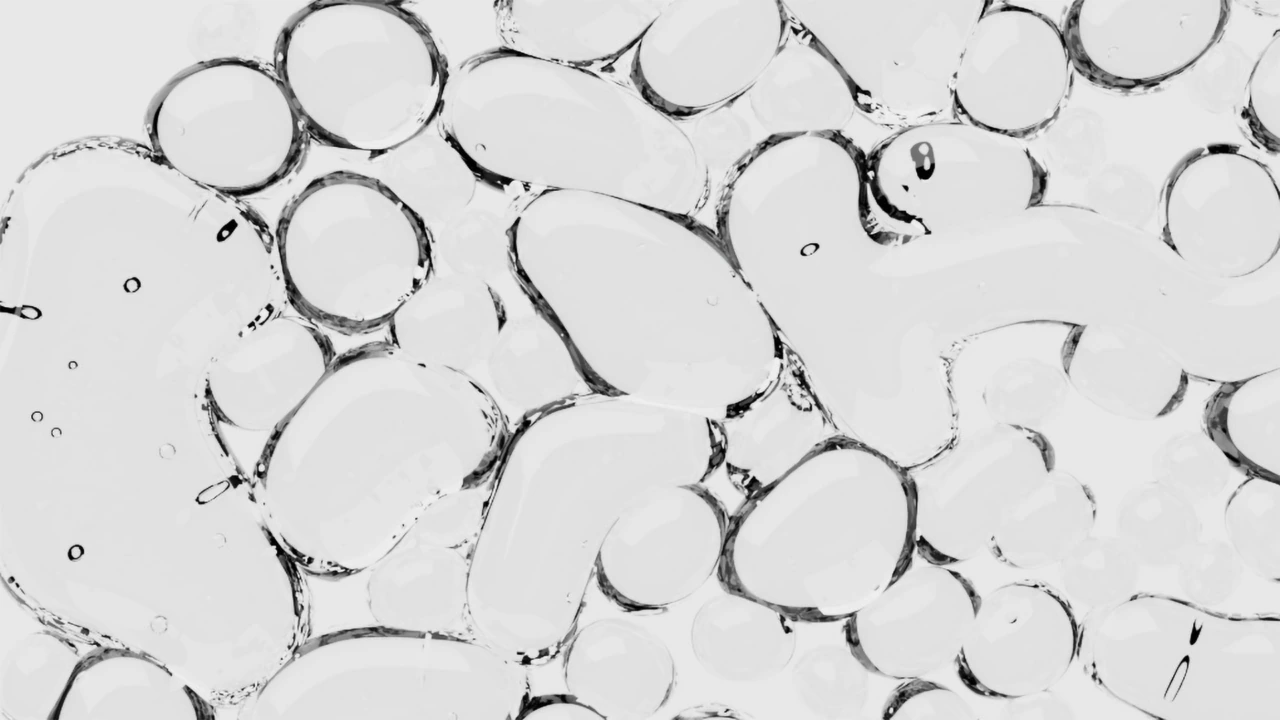

[04] Forms reverting to liquid, retaining traces of their solid state
[Meta States]
Our experiments showed that materials can exist between liquid and solid, holding traces of both states. This opens up new approaches for designing flexible, adaptive structures.